#0 | Founding matrix: the blissful ignorance of a design dream
Greetings! The golden retrieving spirit of a young type designer welcomes you to their safe haven. In the midst of speculative AI bubbles, nuclear wars and invasive metaverses, I hope to bring you a peaceful journey through the cosmos of the written word.
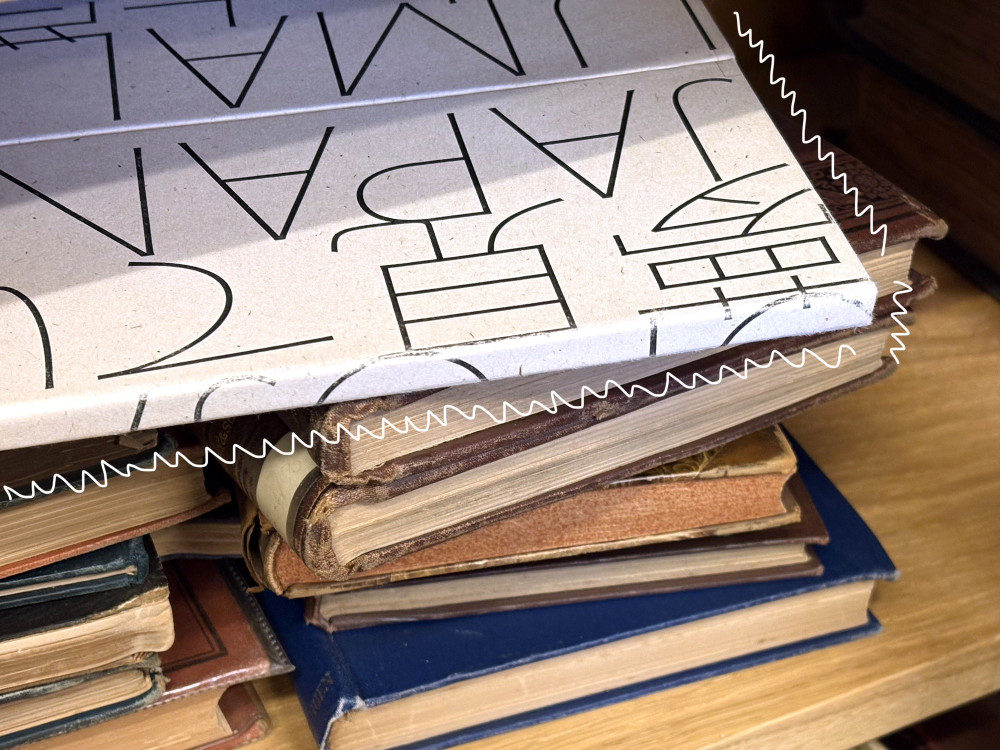
Good looking intro image.
The best way to start any story is at the beginning. An arbitrary pivotal moment that kickstarts a character's journey: from a young shinobi with a fox sealed in their stomach; to a German citizen who single-handedly sparked the big bang of printing; or even an undergrad final project that encapsulated the life decisions of a type designer.
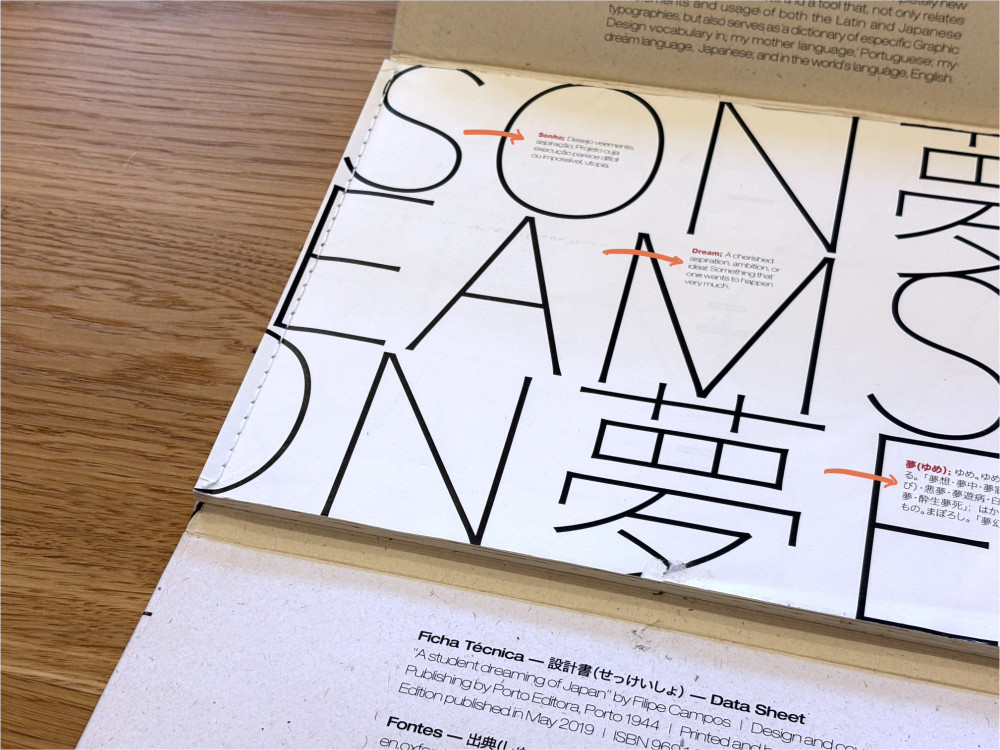
Detail with the meaning of "dream" in Portuguese, English, and Japanese.
Growing up in the early 2000’s meant that several of the animated shows broadcasted on live TV were imported from Japan, from classic references like DBZ and Naruto, to the undercover gems of Samurai X and Medabots. These shows extended into the games I played, books I read, and drawings I made—making me part of fandoms.
Fast forward to the teenage years of my cool design bachelor’s, I easily attached my sense of identity to the idea of Japanese graphic design. Regardless if it was the effect of familiarity or an identity crisis, things labelled "Japanese" often and almost guaranteed sparked my attention. So much so that I even started learning the language in 2016 and aspired to one day study abroad.
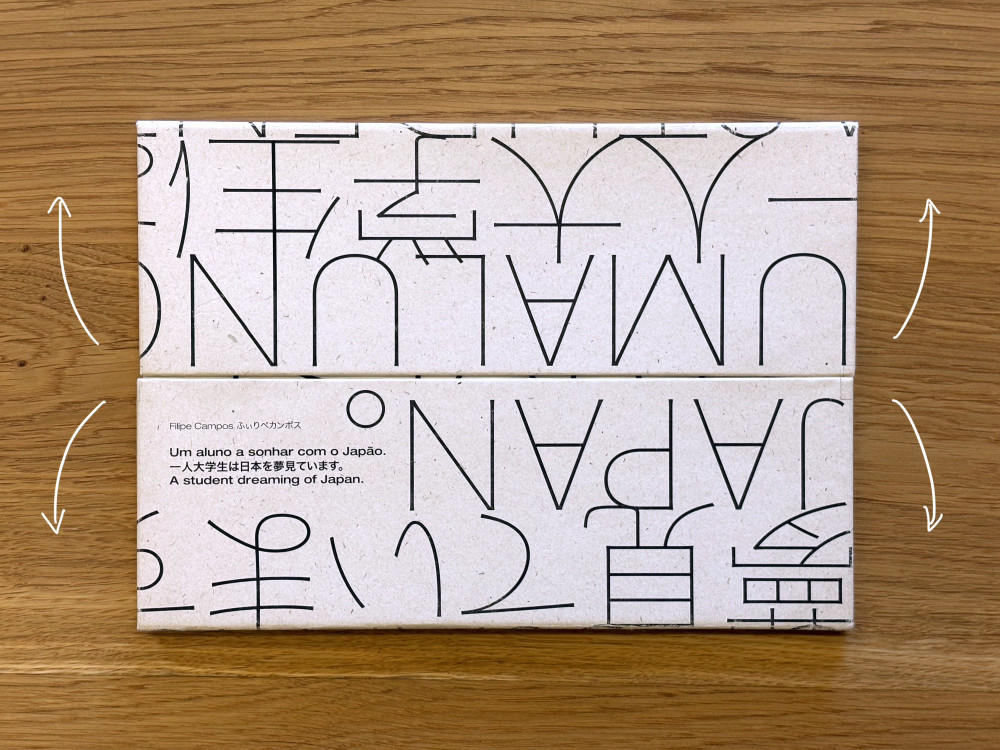
"A Student Dreaming of Japan" front cover. The book has a horizontal format, with two "half-covers" opening outward from the middle in a double spine format.
In search of a deeper connection to one’s own and foreign culture, I turned to the symbols used for representing language to find meaning. It was in the digital drawing, ancient reproduction, and international exchanges of these symbols that I found my own passion—one that although still supported on the clout of Japan, is no longer naively marvelled with the other side.
"A Student Dreaming of Japan" is therefore a flawed cacophony of my love for comics, interest in typography, and a weird literacy combo of (somewhat) familiar languages—perfectly depicting what to expect from tipo_aurora. The project was an early hint of my perspective on type design as a visual interplay of abstract shapes, the scripts that comfort my practice (Latin, Kana and Kanji), and the derivative thoughts I put into words and call research.
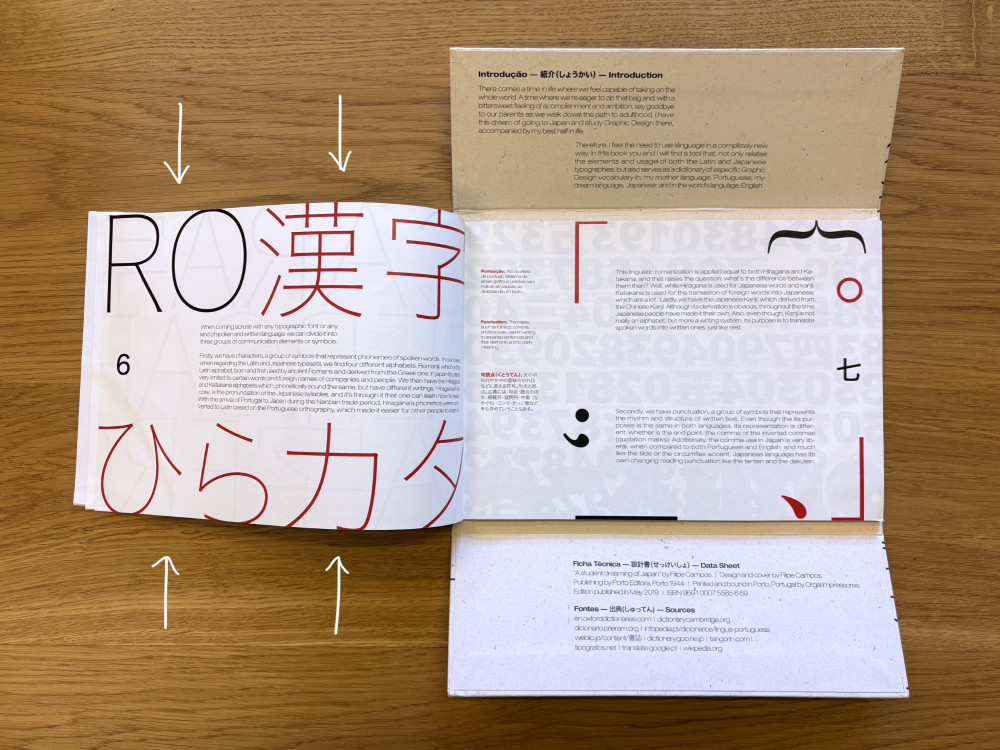
Spread dedicated to the scripts used in the Japanese writing system.
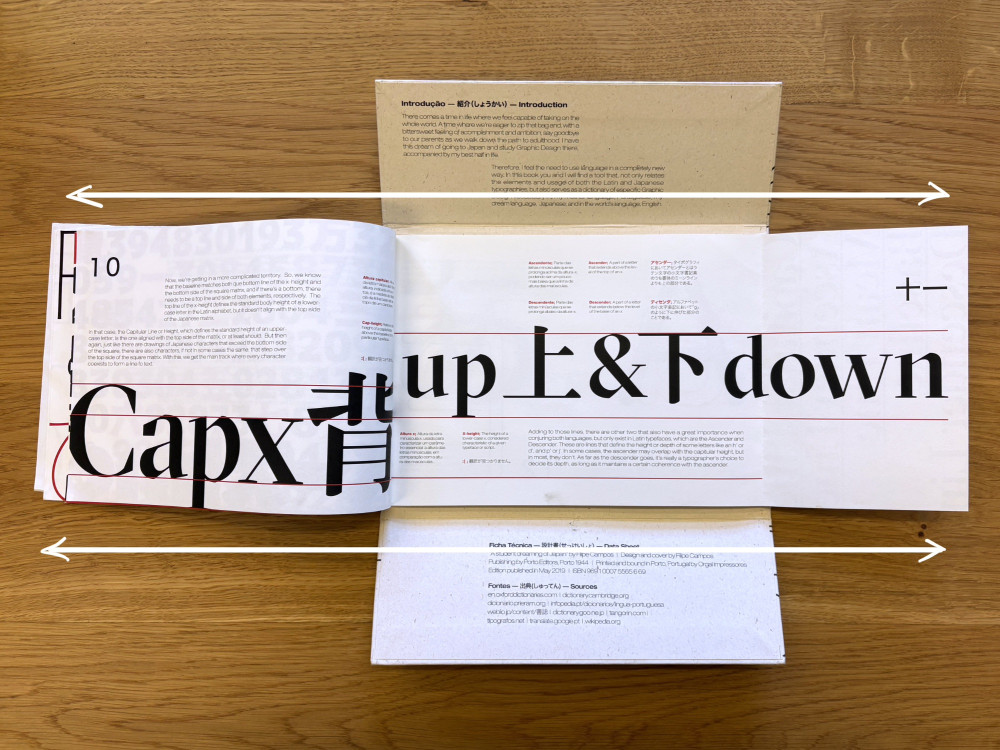
Spread dedicated to the structural lines of characters.
The book aimed to be an illustrated introduction to Latin and Japanese typography through an unconventional format that invited exploration. Addressing what makes each writing system unique and how do they compare to each other. Typography was not only the textual content of the book but also its visual mechanism to illustrate the ongoing discussion.
At the same time, the project tried (but failed) to also be a trilingual dictionary—Portuguese, English, and Japanese—on graphic design and typography related terms. This introduced a third component in the book's visual narrative that functioned as smaller secondary highlights and annotations.
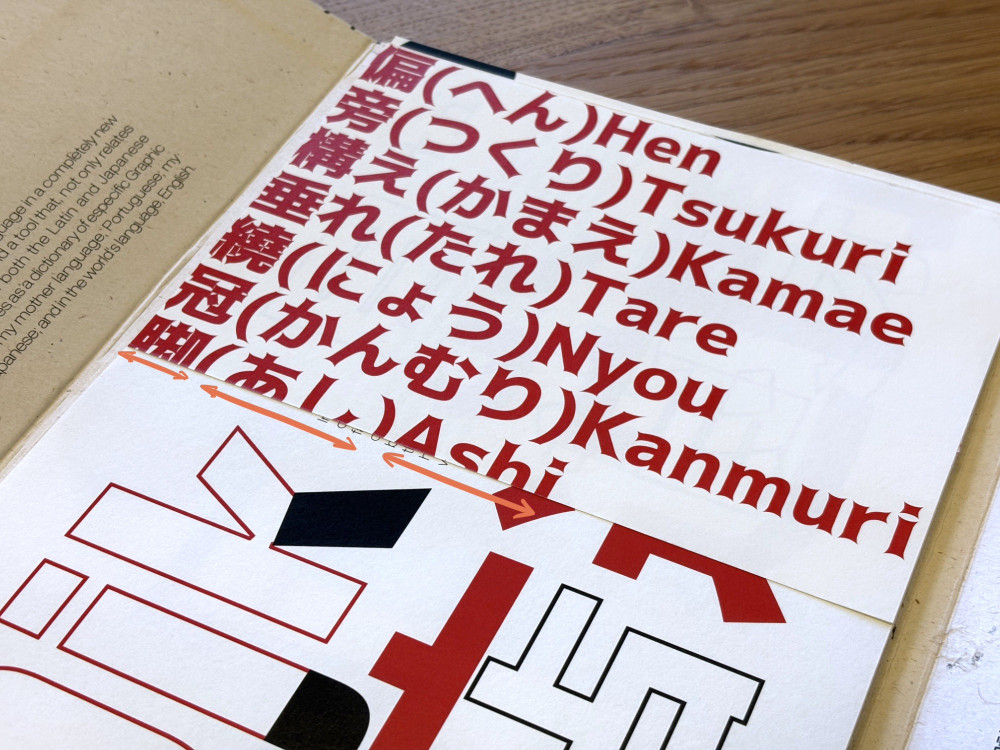
Detail of some technical terms in both Kanji, Kana, and Latin.
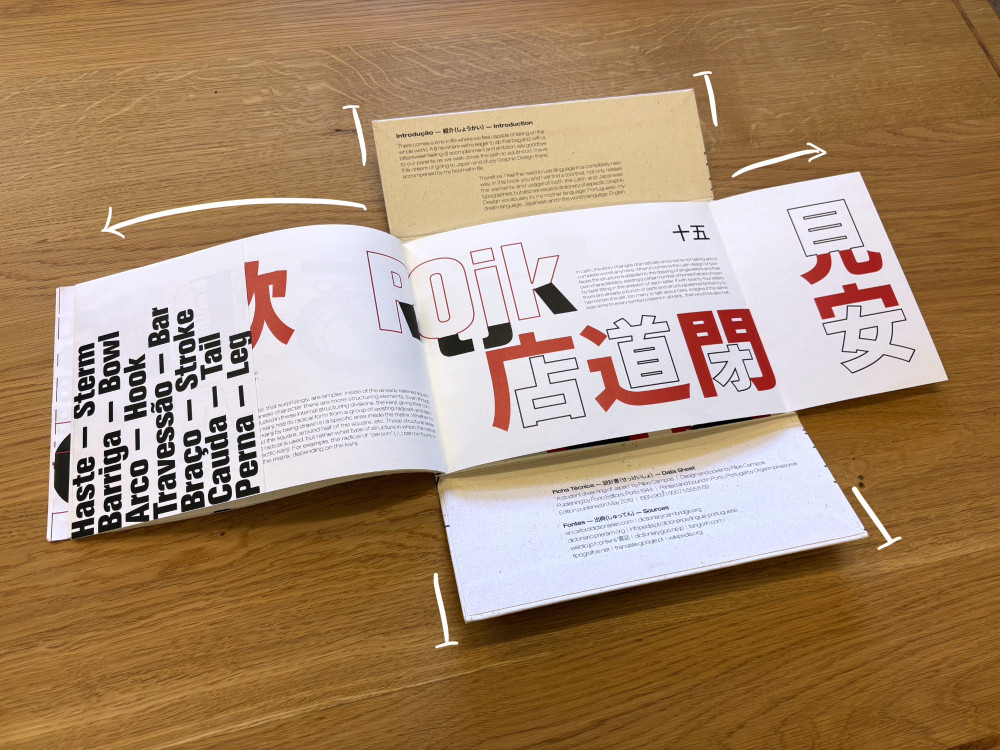
Spread dedicated to character anatomy, with two foldable pages. This is a good example of the explorative format of the book.
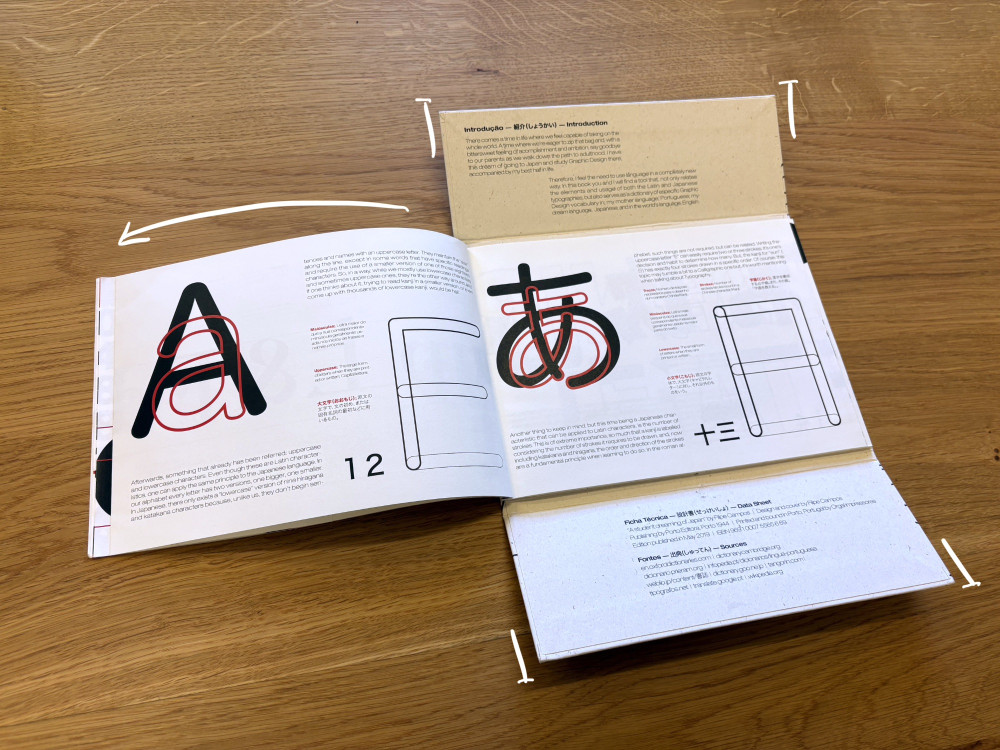
Spread dedicated to stroke order and small/big character variations.
As valiant as my 2019 efforts were in trying to innovate on form and function, the book stands the test of time as a symbol of naive beginnings. I had just 'written' and designed a book from which I now only draw inspiration to keep moving forward. It was an exciting experiment that so much as scratched the surface of how fascinating typography would turn out to be.
Since then it became quite clear that textual reproduction is also a vehicle for—or lack thereof—international diplomacy and identity, creative interpretations of un/familiar cultures, and a contemporary digital tool for free speech and expression. A subject deserving of its due depth and intricacy.
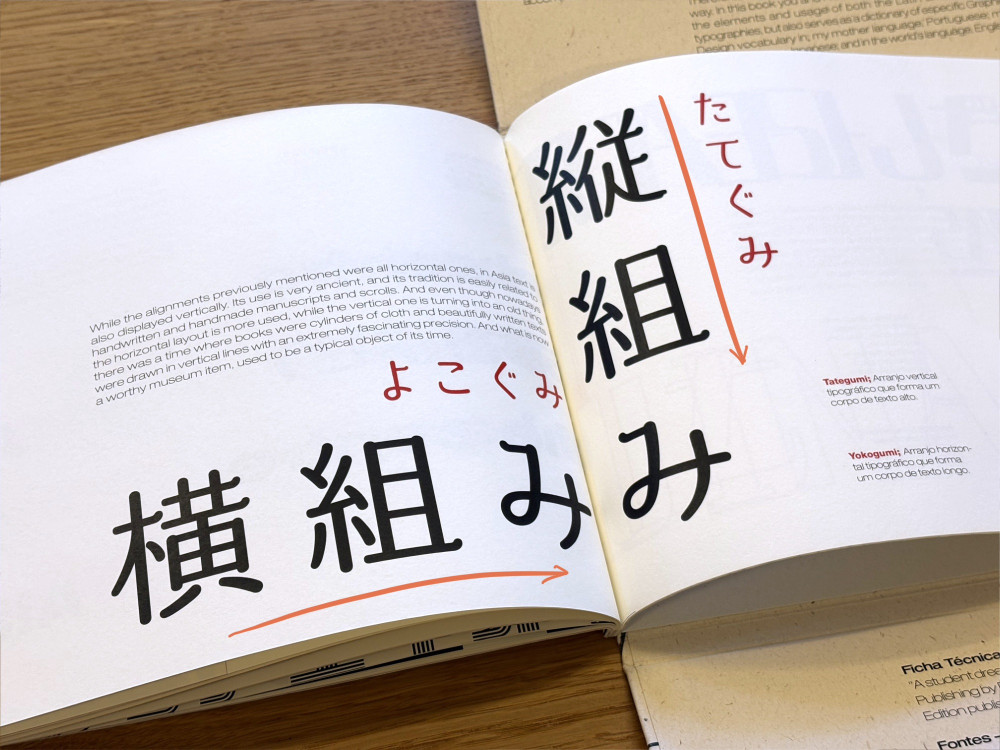
Spread detail dedicated to vertical and horizontal typesetting.
Learning is a continuous process of trial and error. The joy and adrenaline of research lies in the endless process of investigating and creating—repeating it over and over again. The aim of tipo_aurora is to crossover the realms of investigation and type design practice into meaningful projects. So if this premise sparks your interest, then stay tuned for future episodes and adventures.